Dubai Property Market Q3 2026: What the Numbers Mean for Buyers and Investors

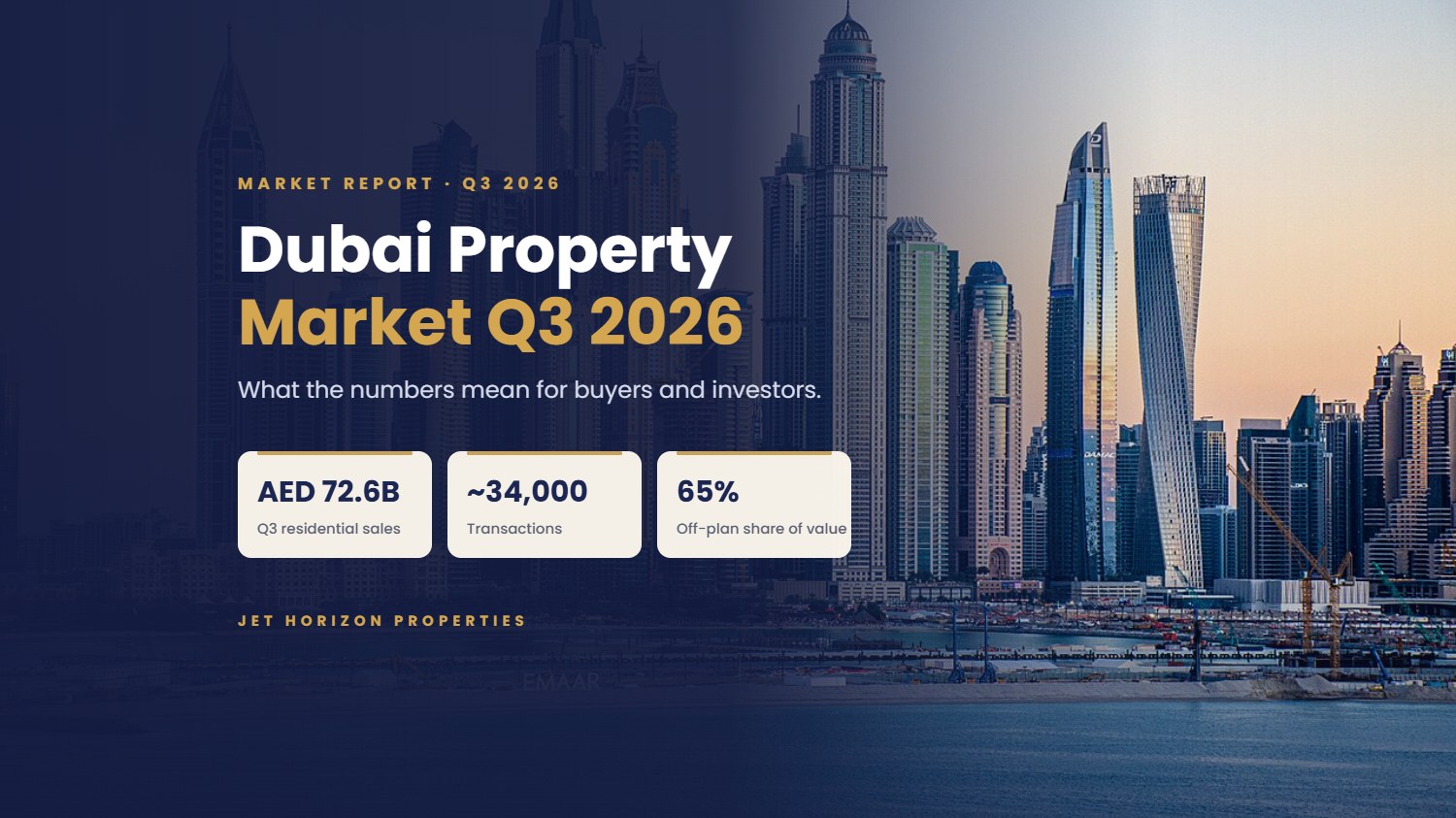
Dubai Marina skyline with Q3 2026 Dubai property market figures: AED 72.6 billion in residential sales, about 34,000 transactions, off-plan 65% of value

After a record 2025, the Dubai property market spent 2026 adjusting to a new reality. The regional conflict that began early in the year slowed buying, pushed some sellers to cut prices and made headlines around the world. The Q3 2026 numbers show what has actually happened since then, and where the opportunities are now.

Q3 2026 at a Glance

  • More than AED 72.6 billion in residential sales across about 34,000 transactions in Q3 (Cavendish Maxwell)
  • Value down 47% and volume down 38% compared with Q3 2025, which was an exceptional quarter
  • Off-plan made up 65% of sales value and 72% of transactions
  • September alone recorded nearly AED 23.2 billion across about 10,300 residential deals
  • First nine months of 2026: AED 292 billion from 112,580 transactions, 27% lower by value than the same period of 2025

Analysts at Cavendish Maxwell describe buyer behaviour as “more measured” since the conflict began. Part of the drop also reflects timing, as some agreed deals take weeks to appear in official registrations.

Prices: The Decline Is Slowing

Prices fell sharply in March, but the pace of decline has eased month after month. According to the ValuStrat Price Index, average residential values fell 5.9% in March, 1.9% in April and 1.2% in May. By August the monthly change was down to just -0.2%, with values 3.1% lower than a year earlier.

The picture is not the same everywhere:

  • Villas have held up better than apartments. CBRE reported villa prices up 5.7% year on year in Q2, against 1.3% for apartments.
  • Luxury and waterfront homes saw the biggest price cuts, as uncertainty over high-income international buyers weighed on the top end.
  • Mid-market communities stayed liquid. Jumeirah Village Circle (JVC) remained one of the most traded areas, with gross rental yields above 7% according to fäm Properties data.

What the Big Players Are Saying

  • UBS ranks Dubai 4th of 23 cities in its 2026 Global Real Estate Bubble Index (score 1.16, “elevated” risk), but notes that Dubai is still affordable by global standards. A skilled worker needs about 5 years of income to buy a 60 sqm city apartment, versus 11 years in London.
  • Emaar founder Mohamed Alabbar expects a 5% to 10% market adjustment, followed by “a nice balance” in 2027 as new supply arrives.
  • Binghatti reported record first-half profit and said demand is coming increasingly from end-users and long-term residents rather than short-term speculators.

What This Means If You Are Buying Now

1. You have more negotiating power

In 2024 and 2025 many good units sold within days at the asking price. Today, especially in the ready and luxury segments, buyers can negotiate on price and terms.

2. Developer incentives are back

Longer payment plans, post-handover instalments and DLD-fee waivers are more common on new launches. Compare offers carefully, as an incentive is only valuable if the underlying price is fair.

3. Rental income still supports the numbers

Rents in Dubai remain high relative to purchase prices, which is why gross yields in mid-market areas are still around 6% to 8%. For long-term investors, yield matters more than short-term price movements.

4. Choose quality and location over hype

In a slower market, the gap widens between strong and weak projects. Focus on proven developers, realistic handover dates and communities where people actually want to live.

What to Watch in Q4 2026

  • Whether monthly price changes turn positive
  • Off-plan launch volumes and how quickly new projects sell out
  • Rental trends as new supply is handed over
  • Any change in regional stability, which UBS says could support a quick recovery in sentiment

Get a Clear View of Your Options

Market averages do not tell you whether a specific property is a good deal. Talk to Jet Horizon Properties for a pricing analysis of any unit or community, browse properties for sale, or read our guide to the best areas to invest in Dubai.

Sources: Cavendish Maxwell (Q3 2026 residential sales), ValuStrat Price Index, CBRE, UBS Global Real Estate Bubble Index 2026, fäm Properties. Figures are for information only and are not investment advice.