Dubai’s New Addressing System: Colour-Coded Street Signs, QR House Plates and What They Mean for Property Owners
 Merryl
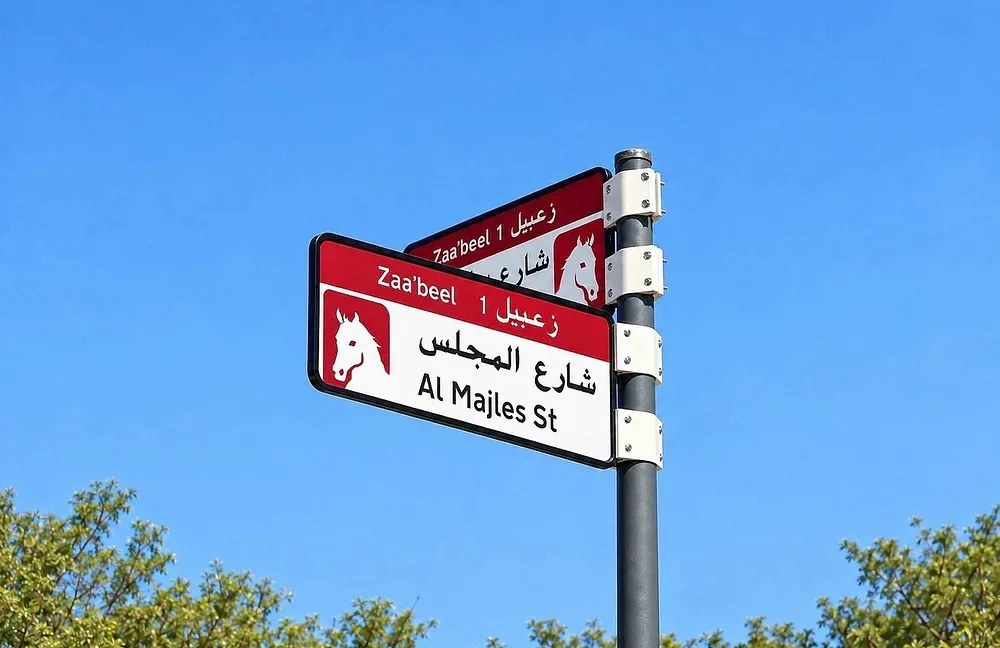


Dubai is changing the way its streets and homes are signed. On 7 October 2026, the Supreme Committee for Urban Planning, working with the Roads and Transport Authority (RTA) and Dubai Municipality, announced a new visual identity for the city’s addressing system: colour-coded area signs, new internal street signs and house number plates that carry a QR code.
The programme covers 186 areas across 19 sectors and will roll out in phases from Q4 2026 to 2030. Here is what is changing, where it starts, and why it matters if you own, rent or plan to buy property in Dubai.
The project replaces and adds three types of signage under one design system:
Every sign follows a palette of five colours, each linked to the geography of the area. Coastal areas use blue and desert areas use gold, so you can tell what kind of district you are in at a glance. House plates use the same colour as the street and area signs around them.
Makani is Dubai’s official geographic addressing system, run by Dubai Municipality. Every building entrance has a unique 10-digit Makani number that pinpoints its exact location. Ambulances, police, couriers and government services use it to find a building quickly, even in communities where street names are not well known.
The new house plates put this number on the front of every property, next to a QR code. Scanning the code is planned to show the area and sector, the meaning behind street and area names, and nearby points of interest.
The first phase installs or replaces more than 2,000 signs in five areas:
Later phases will reach the rest of the 186 areas by 2030. Authorities say areas are prioritised by population density and growth, how central and busy they are, the presence of residential and tourist attractions, and the share of streets that still lack formal addresses. The RTA also plans to extend the same identity to bus stops, smart apps and area map boards.
No action or fee for residents has been announced. The signs and plates are installed by the authorities, and the system is built on existing Makani numbers, so your current address stays valid. The practical step is simply to know your Makani number and share it with visitors and delivery companies.
In large villa and townhouse communities, finding the right unit can take longer than the viewing itself. Clear street signs and numbered plates make it easier for buyers, tenants, agents and movers to arrive at the right door.
Couriers, maintenance teams and contractors depend on accurate addresses. Fewer wrong turns mean fewer missed deliveries and less time waiting at home.
Guests checking in late and contractors visiting for the first time can find a property with a scan instead of a long phone call. That is a small but real improvement to guest reviews and day-to-day management.
Emergency services already rely on Makani. Making the number visible on every home helps responders and callers confirm a location quickly when every minute counts.
Signage alone does not move prices. But consistent addressing, wayfinding and public information are part of what makes a community feel finished and well run, and that supports demand from end users and tenants over time. Areas that receive the upgrade early, such as Nad Al Sheba and Al Khawaneej, are also some of Dubai’s established villa districts.
The first phase begins in Q4 2026, and the full rollout across 186 areas is planned to finish by 2030.
Za’abeel 1, Za’abeel 2, Nad Al Sheba, Al Khawaneej 1 and Nazwa, with more than 2,000 signs in the first phase.
No change has been announced. The new plates display your existing Makani number, which remains your official location reference.
No fee for residents has been announced. Installation is part of the government programme.
It is planned to show the area and sector, the meanings of street and area names, and nearby points of interest.
Location is more than a pin on a map. Talk to Jet Horizon Properties and we will help you compare communities on access, amenities and value. You can also browse properties for sale, explore our Dubai area guides, or check our breakdown of Dubai property buying costs in 2026 before you make an offer.
Details are based on the official announcement of 7 October 2026 and reporting at the time. Timelines and features may change as the rollout progresses.
 English
 العربية